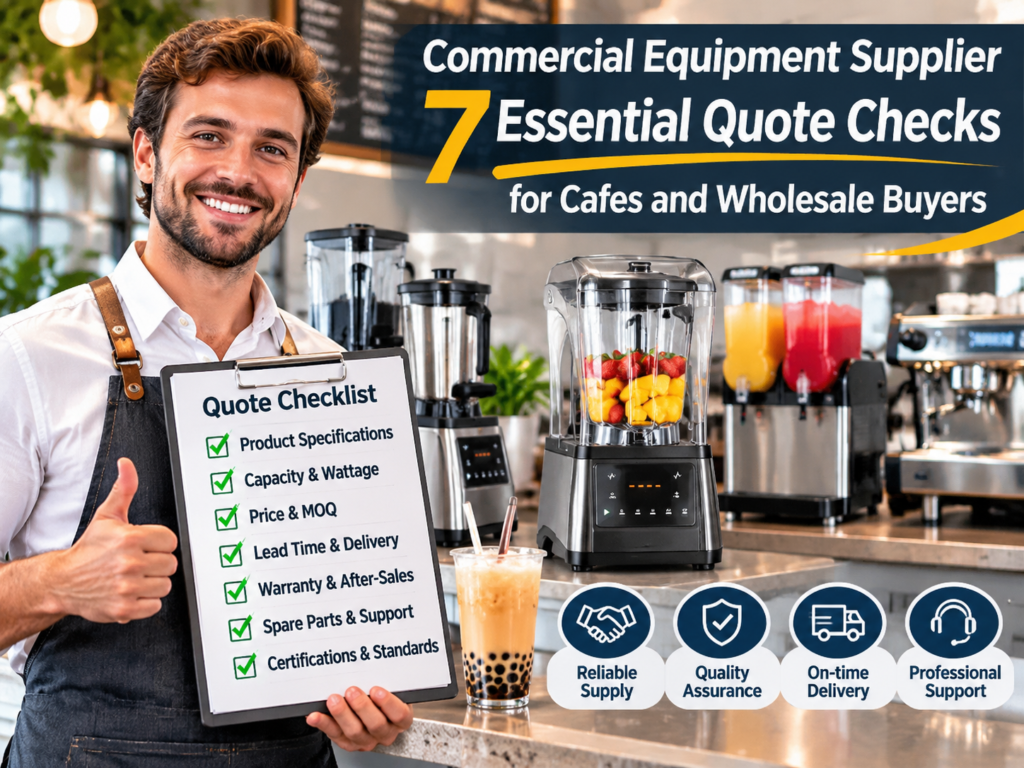
A commercial equipment supplier can give a more useful quotation when you provide the menu, peak demand, destination, electrical requirements and exact equipment configuration. Before comparing prices, put every offer on the same basis: machine, accessories, operating requirements, delivery scope and support. This guide helps cafe owners, bubble tea operators and wholesale buyers prepare that comparison.
Quick answer: How do you choose a commercial equipment supplier? Compare a written configuration, a representative recipe trial, destination-compatible electrical specifications, an itemized quotation and clear support terms. A low unit price alone does not show whether the supplied machine will fit your drinks, installation or workload.
Commercial Equipment Supplier Checklist: What to Send First
Start with a short purchasing brief. A new cafe, an established juice bar and a distributor ordering multiple models need different information. Tell the supplier which situation applies, rather than asking only for a full catalog and the best price.
| Buyer information | Useful detail | Why it helps |
|---|---|---|
| Menu and recipes | Frozen fruit smoothies, milk tea, espresso, shakes or food preparation | Identifies the relevant equipment and trial conditions |
| Demand | Orders in the busiest 15 minutes and portions per order | Supports a realistic station workload discussion |
| Destination | Country, city and delivery location type | Clarifies electrical versions and delivery scope |
| Configuration | Jar or bowl, accessories, dimensions and cleaning access | Makes competing offers comparable |
| Order plan | Quantity, sample request and expected repeat order needs | Separates a trial purchase from a wholesale equipment order |
1. Match the Equipment to the Recipe and Service Model
A commercial blender supplier should understand your ingredients, batch size and desired texture. Ice, frozen fruit, thick mixtures and dry ingredients are different applications. Share an actual recipe, including ingredient weights and starting temperature, and ask whether the proposed model is intended for that use.
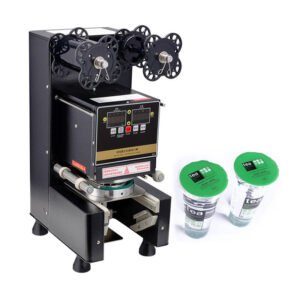
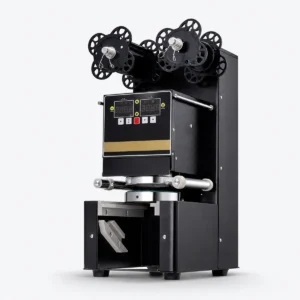
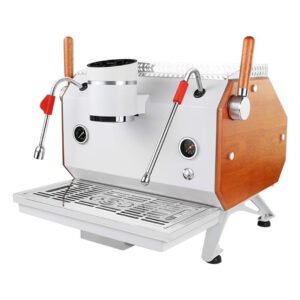
For espresso equipment, describe your milk drink mix, water connection and available counter space. For a bubble tea equipment supplier, include cup sizes, sealing materials, topping preparation and the order in which drinks are assembled. Buying a collection of individually suitable machines does not automatically create an efficient beverage station.
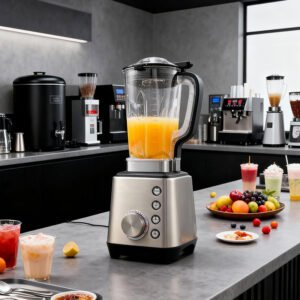
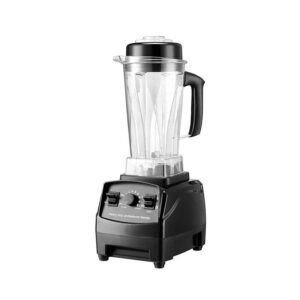
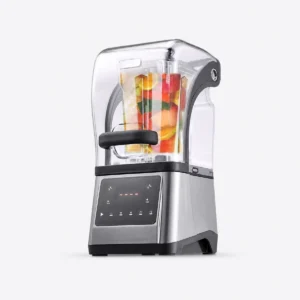
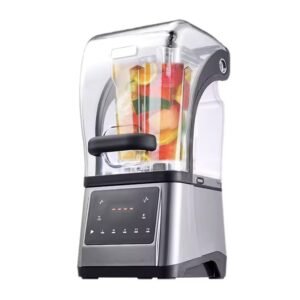
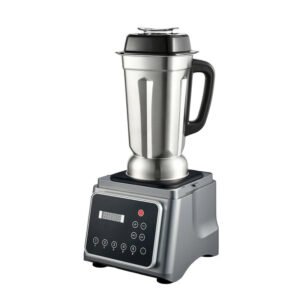
Use the YLT Motion commercial beverage and food processing equipment center to shortlist categories. For a blender station, compare the 1800W commercial blender with a 1.8L jar and the 2000W commercial blender with a 1.6L jar, then confirm the exact supplied configuration. These specifications describe different products; wattage alone does not establish which one makes your recipe faster.
2. Request a Repeatable Sample or Demonstration
When comparing wholesale commercial blenders or other cafe equipment, request a trial that resembles your service conditions. Record ingredients, loaded quantity, preparation steps, processing time, finished texture and cleaning time. Ask the supplier to identify the model and accessories shown in any demonstration video.
- Use the same recipe and load for each candidate machine.
- Include loading, dispensing and cleaning in the cycle measurement.
- Ask for operating limits and required rest intervals from the model instructions.
- Check whether the sample configuration will match the later order.
- Record any recipe changes needed to achieve the desired result.
Here is a planning example, not a product performance claim. If a complete cycle takes 90 seconds, one position has a theoretical ceiling of 10 cycles in 15 minutes. Staff movement, ingredient replenishment and cleaning reduce usable capacity. Trial the complete workflow before committing to a peak service target.
3. Confirm the Electrical Version and Installation Details
For a commercial equipment supplier quotation, request the rated voltage, frequency, power, plug type and installation requirements for each selected model. State whether the destination uses a 110–120V or 220–240V supply. A plug adapter does not change the appliance’s voltage rating.
Ask for the dimensions with lids, sound covers, handles and removable components in their operating positions. Check ventilation clearance, access for cleaning and any water or drainage connections. A commercial coffee machine supplier may need additional details about water treatment and the intended water connection.
Have a qualified local installer confirm the circuit and connection requirements for the selected equipment. Request the relevant product documents for your destination and exact model; do not infer certification from a catalog photograph or a general company statement. If you need to verify a claimed NSF listing, use the NSF official food equipment listing search and match the product identification.
4. Ask for an Itemized Cafe Equipment Quote
A cafe equipment quote should say exactly what the price includes. List every machine and accessory separately, including spare jars, blades, seals, portafilters or other model-specific components where relevant. Ask the supplier to distinguish included items from optional extras.
Compare the total cost for an equivalent supplied configuration. An apparently cheaper offer may use a different jar, omit an accessory or quote a different electrical version. Currency, quotation validity, quantity and payment terms should also appear in the written offer.
| Comparison line | Question to resolve |
|---|---|
| Machine | Is the exact product and electrical version identified? |
| Accessories | Which quantities and component references are included? |
| Trial or sample | What is charged, and are any later credits explicitly agreed? |
| Packaging | What packing format and packed dimensions are quoted? |
| Delivery | Which transport, handling and destination charges are included? |
| Support | What process, parts and costs apply after delivery? |
5. Separate Sample Orders, MOQ and Customization
Ask your commercial equipment supplier to quote a standard product separately from a customized version. Minimum order quantity, sample availability, logo work, packaging changes and lead time may differ. A standard product purchase does not automatically include private label production.
YLT Motion’s stated minimum order quantity is one piece. Confirm the selected model, current price and any customization conditions in the written quotation. If you want to test one unit before a larger order, ask which configuration is available and whether the later order can match it. Do not assume a sample cost will be refunded unless this is agreed explicitly.
Distributors should also identify repeat-order requirements: component compatibility, labeling, manuals and replacement parts. These questions make a wholesale cafe equipment order easier to manage after the first shipment.
6. Define Delivery Scope and Timing
Send the destination and ask which delivery services can be quoted for your order. Separate preparation time from transport time, and ask when each estimate starts. Confirm whether the goods are currently available or require production before relying on a dispatch estimate.
Request a clear list of included and excluded charges, the named delivery point, packaging information and the procedure for documenting transport damage. A door delivery quote can still have conditions, so ask who handles unloading and any special site access. Obtain destination-specific import advice from the appropriate service provider where needed.
For a multi-machine order, ask whether the goods will ship together or separately. Different packing methods and dispatch dates can affect the practical opening schedule of a cafe or beverage shop.
7. Check Cleaning, Spare Parts and After-Sales Support
A restaurant equipment supplier should be able to explain the model’s cleaning instructions and the support process. Ask which components are operator-removable, which parts are consumables and how to identify a replacement. Confirm the scope and duration of any warranty in the quotation, including exclusions and who pays relevant shipping or service costs.
For a milkshake station, compare the single-head commercial milkshake machine and double-cup milkshake machine. Check cup compatibility and the actual operating arrangement; two mixing positions should not be treated as a promise of twice the station output.
Prepare staff routines using the milkshake machine cleaning and maintenance guide and evaluate a blender station with the smoothie bar workflow guide. Always follow the supplied model instructions when they specify a particular method or operating limit.
Copy This Equipment Inquiry Template
Hello, I am sourcing commercial beverage equipment for a [cafe / bubble tea shop / restaurant / distribution business]. Our destination is [country and city]. Our main menu is [drinks or recipes], and our busiest 15-minute demand is [orders and portions].
Please quote
with [voltage, frequency and plug]. Include the exact configuration, accessories, packed dimensions, sample options, preparation time, delivery scope, replacement parts and warranty terms. Please identify any information you still need before recommending a model.
1200W Centrifugal Juicer with 85mm Feed Chute and 5-Speed LCD Control for Fruit and Vegetables
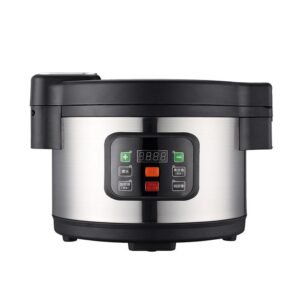
12L Boba Cooker with Automatic Digital Controls for Tapioca Pearls and Bubble Tea Shops
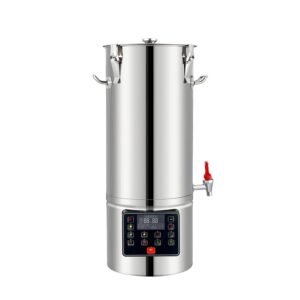
18L Commercial Soy Milk Machine with 1600W Motor and Stainless Steel Body for Foodservice
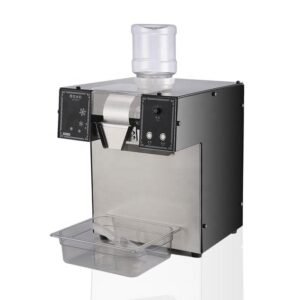
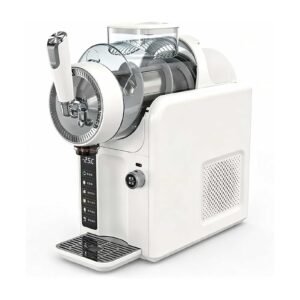
2L Slush Machine and Soft Serve Ice Cream Maker with 5 Preset Modes in Black or White
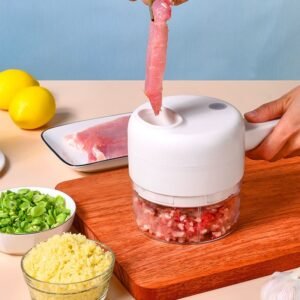
4 in 1 Portable Electric Vegetable Cutter with USB-C Charging for Easy Chopping and Slicing
5L and 7L Electric Dough Mixer with Fermentation for Bread, Pizza and Small Batch Baking
Commercial Double Tank Deep Fryer 12L with Dual Baskets and Temperature Control for Restaurants
Commercial Electric Deep Fryer with Basket, 6L Stainless Steel Countertop Fryer for Restaurants
Commercial Electric Vegetable Cutter and Slicer for Cabbage, Carrots, Onions and Food Prep
Commercial Electric Vegetable Cutter, Stainless Steel Dicer, Slicer and Shredder for Restaurants
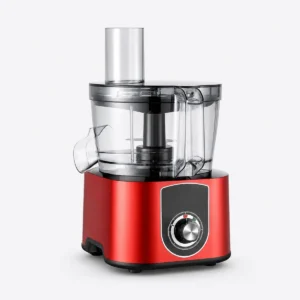
Commercial Food Processor Machine for Restaurants | Stainless Steel Food Processing Equipment
















Frequently Asked Questions About Choosing a Commercial Equipment Supplier
What should I send a commercial equipment supplier for a quotation?
Send your menu, peak demand, product quantities, destination, voltage, frequency and plug requirements. Include accessory needs and delivery expectations so the supplier can identify missing details and quote a defined configuration.
Can I buy one machine before placing a wholesale order?
YLT Motion’s stated MOQ is one piece. Ask for the chosen model’s current availability, sample price and configuration. Customization conditions and later wholesale pricing should be confirmed separately.
How do I compare two equipment quotations fairly?
Compare the same electrical version, accessories, trial conditions and delivery scope. Then review preparation time, cleaning requirements, replacement parts and support terms. A comparison is incomplete when one offer omits items included in the other.
Should I choose a commercial blender by wattage alone?
No. Compare the intended application, jar configuration, usable batch, operating limits and results with your recipe. Measure the complete station cycle rather than assuming the highest power rating gives the best service output.
What is the difference between standard and private label equipment orders?
A standard order uses the offered product configuration. A private label equipment order can involve agreed logo, packaging or documentation changes. Ask which changes are available and confirm their quantity requirements, costs and lead time in writing.
Can one supplier quote several beverage equipment categories?
Yes, a multi-category supplier can help you compare an equipment list. Confirm each item individually, because electrical options, available accessories and lead times can differ across models.
Discuss Your Equipment List with YLT Motion
YLT Motion helps cafes, restaurants, importers and distributors source commercial beverage and food preparation equipment. Send your short list and destination so we can discuss suitable configurations and prepare a more focused quotation. Product options, documents, price and delivery conditions are confirmed for the selected order.
Request an itemized equipment quotation or send your purchasing brief on WhatsApp.