Türkçe — ürün bilgileri ve satın alma rehberleri
ไทย — ข้อมูลสินค้าและคู่มือจัดซื้อ
Deutsch — Produktinformationen und Einkaufsratgeber
Русский — описание и руководство по выбору
Français — informations et guide d’achat
Português (Brasil) — detalhes e guia de compra
Español — detalles y guía de compra
العربية — تفاصيل المنتج أو الدليل
Bahasa Indonesia — Lihat produk atau panduan ini
Tiếng Việt — Xem nội dung bằng tiếng Việt
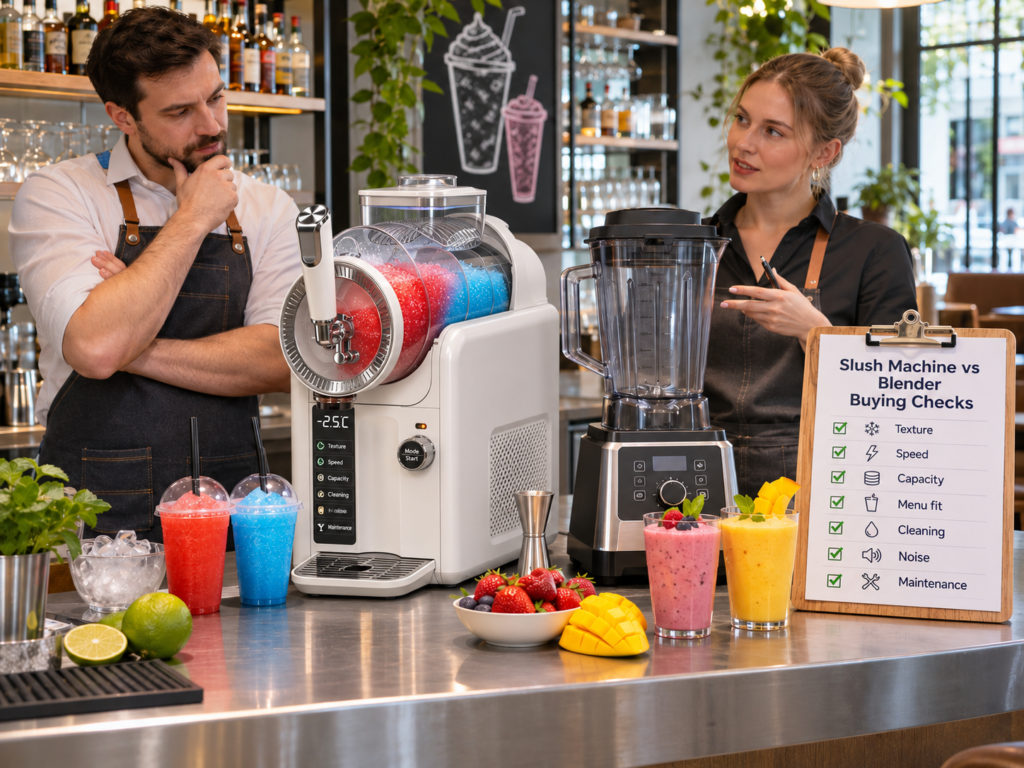
Slush machine vs blender: choose a refrigerated slush machine when you want to freeze a compatible liquid mix and dispense repeated portions of the same recipe. Choose an ice-capable beverage blender when you need individual drinks made from ice, fruit or other permitted ingredients. The right choice depends on your menu, peak demand, recipe flexibility and cleaning routine.
This slush machine vs blender guide helps café owners, bar managers and equipment buyers compare the complete preparation process. It also explains why nominal tank volume, blending time and frozen-drink preparation time should not be treated as interchangeable measures of output.
1. Slush Machine vs Blender: Understand the Preparation Method
A refrigerated slushie machine removes heat from a suitable liquid while a stirring assembly keeps the mixture moving. An ice-crushing blender uses blades to break up permitted cold ingredients and combine them with liquid. Most beverage blenders do not refrigerate the finished drink.
These methods create different workflows. A slush dispenser requires preparation time before the batch is ready, then can dispense from that prepared batch within its operating limits. A blender prepares successive recipes in its container, with loading, pouring and cleaning between orders. Evaluate both methods using your actual serving sequence.
| Buying question | Refrigerated slush machine | Ice-capable beverage blender |
|---|---|---|
| How is the texture produced? | Cooling and stirring a compatible liquid mix | Blending liquid with permitted ice or frozen ingredients |
| When is preparation done? | Before serving the prepared batch | As each container batch is blended |
| How are flavours changed? | Replace the mix and complete the required cleaning process | Change the recipe and clean or change the permitted container |
| Does the machine keep cooling? | Depends on the supported operating mode and instructions | Usually no active refrigeration in the beverage container |
| What determines output? | Usable fill, recipe, cooling performance, refill procedure and serving pattern | Working batch size, loading, blend cycle, pouring and cleaning |
2. Check Recipe Compatibility Before Buying
In a slush machine vs blender comparison, start with a written ingredient list. A liquid-based frozen drink maker may have specific requirements for sugar, alcohol, solids and permitted mix types. Do not assume that it can crush fruit, grind ingredients or accept ice cubes because a listing also uses the word smoothie.
Use the selected machine’s manual for the required formulation. Sugar and alcohol influence freezing behaviour, but a recipe limit supplied for one model is not a universal rule for every slush machine. Ask the supplier to demonstrate your intended drink rather than copying a ratio from another manufacturer’s instructions.
For a commercial smoothie blender, confirm that the exact model and container are suitable for your ingredients, including ice size, frozen fruit and the intended batch consistency. If your menu includes whole-fruit smoothies and liquid-based slush drinks, two different machines may serve the menu more effectively than forcing one appliance to handle incompatible tasks.
3. Calculate Demand and Available Portions Separately
Measure the busiest 15 or 30 minutes of service and list the expected drink sizes. For slush machine vs blender planning, distinguish ready-to-serve volume from the rate at which new product can be prepared. A full tank at opening can hide a refill bottleneck later in the shift.
Illustrative batch calculation: if a recipe has an approved working fill of 1.5L and each drink uses 250ml of the prepared mixture, that is six nominal portions before allowing for residue, sampling or serving losses. This is a planning example, not the working-fill specification of a particular 2L appliance. Use the actual fill limits and measure usable yield in a sample test.
For a blender, time the complete order cycle: collecting ingredients, loading, blending, pouring and preparing the container for the next drink. A short advertised blend cycle excludes many of these tasks. For a slush dispenser, test what happens after several portions are served and new mix is added, following its approved refill procedure.
Ask whether the equipment is rated for household, occasional or commercial use. A compact home slush machine should not be assumed to have the continuous output or service support needed for a busy bar simply because it has a frozen cocktail preset.
4. Match Flavour Flexibility to Your Menu
A single-vessel slush machine holds one mixture at a time. This can fit a focused menu where customers repeatedly order the same frozen coffee or fruit drink. More flavours may require additional vessels or a different service plan. Assess likely demand for each flavour rather than dividing total sales evenly without evidence.
A frozen cocktail blender can support varied made-to-order recipes when it is rated for the ingredients. The operator can change portions or flavours between blends, while managing cleaning and ingredient handling. That flexibility adds preparation work, so compare actual staff time as well as equipment cost.
Neither method guarantees a particular texture from every recipe. Record ingredient brands, weights, temperatures and serving sizes during testing. A repeatable recipe makes the slush machine vs blender decision more useful than comparing two unrelated drinks made under different conditions.
5. Evaluate Cleaning Beyond the Rinse Button
Ask the supplier to demonstrate complete cleaning, including the dispensing outlet, seals, stirring assembly and container where applicable. A rinse or automatic cleaning program may assist with residue removal, but users still need the full procedure specified for the equipment. Confirm which parts can be removed, which cleaning products are allowed and how components should dry.
For blenders, inspect container and lid access, the permitted cleaning method and the procedure between different recipes. Spare containers can help organise service, but compatibility and cleaning requirements still need checking. See our blender jar compatibility guide before ordering replacement containers.
Milk-based drinks and changes between different ingredients require an appropriate handling and cleaning routine. A slush machine vs blender comparison should include the time, sink access and staff responsibility needed to complete that routine. Follow applicable food-handling requirements and the equipment instructions rather than treating an operating mode as a storage guarantee.
6. Confirm Counter Space, Power and Operating Conditions
Measure the footprint plus the space needed to fill, dispense, pour and remove parts. Refrigerated equipment also needs the specified ventilation clearances. A countertop slush machine that physically fits between two appliances may still lack the required operating airflow.
Confirm voltage, frequency, plug, rated power and the intended supply before ordering. Where two voltage ranges are listed, ask whether these represent separate builds or an automatic universal-voltage design. A suitable plug alone does not confirm electrical compatibility.
Observe the equipment at the proposed location or under comparable conditions. For a guest-facing blender, listen during a representative ice-based cycle. For a refrigerated dispenser, assess the compressor and mixing sounds as well as heat released into the work area. Use measured or demonstrated information when noise matters, rather than an unsupported quiet label.
7. Test Samples and Compare the Complete Purchase
Write a short acceptance test before requesting a frozen beverage equipment quotation. Use the same recipe and serving target wherever a direct comparison is appropriate. Where the methods require different formulations, compare the finished menu item and the work required to serve it, and document the differences.
| Provide to the supplier | Ask the supplier to confirm |
|---|---|
| Drink menu and ingredient list | Recipe compatibility and permitted ingredients |
| Peak orders and serving size | Demonstrated usable yield, refill behaviour and operating limits |
| Country and available supply | Electrical version, plug and available product documentation |
| Counter layout and cleaning facilities | Clearances, removable parts and full cleaning method |
| Quantity and delivery destination | Included accessories, spare parts, packaging, lead time and quotation terms |
Budget for the complete station, including any required ice supply, ingredient storage, spare containers, cleaning materials and service support. Our beverage equipment budget guide provides additional purchasing questions. Choose the system that fits the intended task and operating limits, rather than relying on nominal capacity alone.
Frequently Asked Questions
Which is better: a slush machine or a blender?
A refrigerated slush machine fits compatible liquid recipes prepared in batches. An ice-capable blender fits varied drinks made from permitted ice, fruit and liquid ingredients. The menu and busiest service sequence determine the better fit.
Can I put whole fruit or ice into a slush machine?
Only if the selected machine’s instructions explicitly allow it. Many liquid-based slush machines are not designed to chop solid ingredients. Prepare the mix using the approved method.
Can a blender make slushies?
An appropriately rated blender can make an ice-based frozen drink from a suitable recipe. It usually does not continue refrigerating the drink after blending, so its service process differs from a refrigerated dispenser.
Does a 2L tank mean eight 250ml drinks?
Not necessarily. Nominal container volume may differ from the approved working fill, and dispensing losses affect yield. Measure the usable finished mixture and calculate portions from the intended serving amount.
Can any frozen drink maker produce soft serve ice cream?
No. Select a model with an explicitly supported dessert mode and a compatible mix. A slush preset alone does not establish soft serve capability or commercial ice cream output.
Does self-cleaning remove the need for manual cleaning?
No. Follow the full manufacturer procedure for rinsing, disassembly where permitted, washing and drying. Confirm the requirements for the outlet, seals and other product-contact components.
References and Equipment Enquiries
Ninja’s model-specific frozen drink maker FAQ illustrates why permitted ingredients, formulation and cleaning instructions must be checked for each design. Vitamix’s commercial blending overview explains blade-based processing of ice and frozen ingredients. These references describe their own equipment; their capacities, recipe limits and procedures should not be transferred to other machines.
Use this slush machine vs blender guide to prepare your enquiry to YLT Motion. Send your destination country, menu, peak demand, serving size and electrical requirements. Contact YLT Motion on WhatsApp for equipment options and a quotation, email li1232809@gmail.com, or explore our beverage and food preparation equipment.