العربية — تفاصيل المنتج أو الدليل
Bahasa Indonesia — Lihat produk atau panduan ini
Tiếng Việt — Xem nội dung bằng tiếng Việt
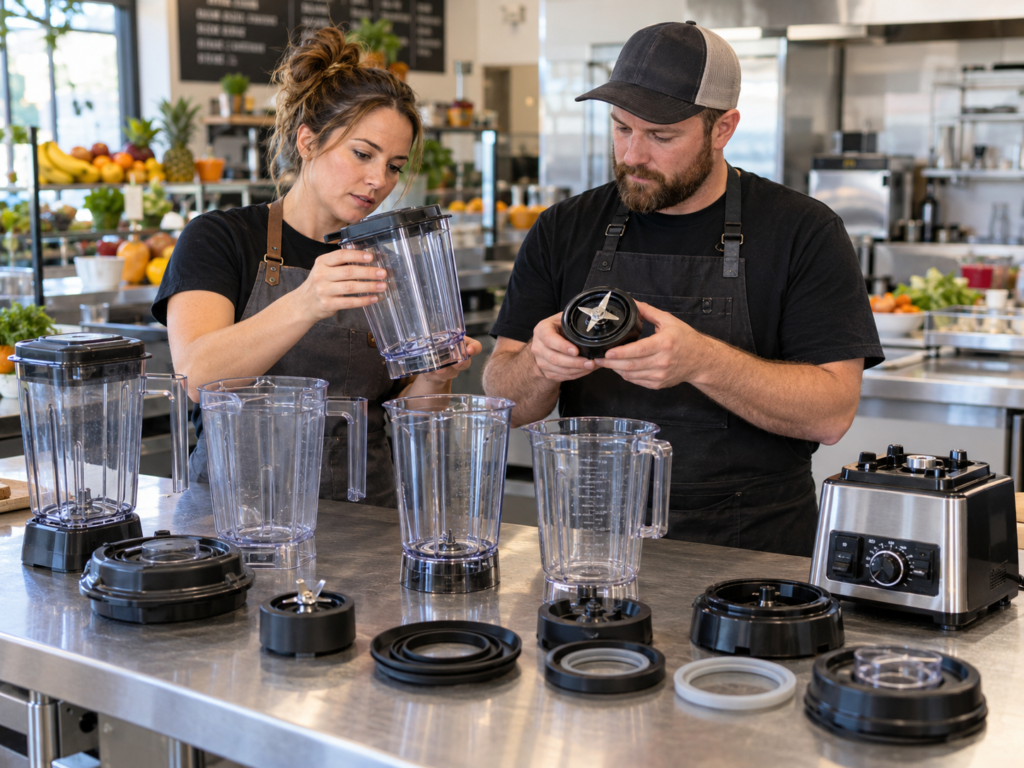
Blender jar compatibility depends on the complete connection between the container, blade assembly, motor base and lid. Matching a replacement by capacity alone is unreliable: two 1.8L jars can have different mechanical interfaces, and a similar-looking 2L container may belong to another machine family.
Quick answer: identify the exact blender model and approved container reference, confirm the supplied components, and check the drive interface, seating profile, lid, enclosure clearance and permitted use. Obtain written compatibility confirmation before purchasing a replacement blender jar or ordering spare containers in quantity.
Why Blender Jar Compatibility Matters
A jar is part of a working blending system. Its fit, blade configuration and operating limits affect how it works with the base. A container that appears to sit on the machine has not necessarily been verified for operation.
For a cafe, juice bar or equipment distributor, the goal is a documented match that can be reordered accurately. Treat photographs and dimensions as supporting information alongside model identification and approved part references. Avoid choosing a replacement blender jug solely because the color, capacity or handle resembles the old one.
| Information | What it helps establish | What it cannot establish alone |
|---|---|---|
| Nominal volume | Container size category | Base or blade compatibility |
| Material description | Listed container construction | Approved temperatures or food-contact documentation |
| Underside photograph | Visible drive and seating details | Full tolerances and operating approval |
| Exact model and part reference | The intended equipment configuration | That every component in a quotation is included |
1. Identify the Exact Machine and Container
Start with the blender’s nameplate, model designation and existing jar reference. Include the serial number or production version if the manufacturer uses it to identify parts. Two machines sharing a sales name may have different supplied components or revisions.
Photograph the whole machine, its nameplate, the complete jar and the underside of the jar. Place a ruler beside relevant dimensions when the supplier requests measurements. Avoid obscured images or photographs taken only from above.
For a multi-location business, record blender jar compatibility separately for each machine model. A simple approved parts register can identify the base, container, lid and blade assembly used at each site. That is more useful for repeat purchasing than a description such as “commercial blender cup.”
2. Confirm Whether the Quote Is for a Jar or an Assembly
A listing may offer a container only, a jar with a blade assembly, or a complete set including the lid and sealing components. Similar product photographs do not guarantee identical contents. Ask for a written list of included parts.
Check the vessel, blade unit, seals, retaining parts, lid and lid cap where applicable. The blade material specification alone does not prove that the blade is included. Likewise, a jar shown with a lid in a demonstration may be quoted separately from that lid.
If the plan involves transferring parts from the old container, obtain confirmation that this is supported for the exact components. Follow the manufacturer’s service procedure and use appropriate service support. Mixing an unverified blade, gasket and housing can undermine an otherwise correct container purchase.
3. Verify the Drive Connection and Seating Profile
The underside of a blender container is a key part of blender jar compatibility. The drive connection must work with the approved base arrangement, and the jar must seat in the intended position. Visible similarities between couplings are not sufficient proof of a match.
Ask the supplier to compare the drive interface, surrounding profile and support arrangement with the original part. Provide clear underside and base photographs. If the machine has a centering pad or another supporting component, include its condition and reference in the discussion.
Manufacturer-specific guidance illustrates why these checks matter. Vitamix’s commercial support information distinguishes drive and container systems and discusses wear in related components. Its instructions apply to the identified Vitamix equipment; they do not establish compatibility for another supplier’s jar.
Do not force the replacement into place, grind a coupling or modify the base to obtain a fit. Arrange confirmation or inspection when the interface is uncertain. A visual seating check should be part of an approved installation procedure, not a substitute for one.
4. Match the Blade Assembly to the Application
Confirm the approved blade assembly reference and the intended recipes. A replacement container for beverage blending should not automatically be treated as a dry grinding jar, a hot-liquid container or an ice-processing accessory. The relevant limits belong to the complete jar-and-base combination.
When reviewing blender jar compatibility, ask whether the supplied assembly matches the existing machine configuration or requires a different approved setup. Do not assume that additional blades or a different blade shape will improve a recipe on the same base.
For a sample acceptance trial, use the intended ingredients and the operating procedure approved for that equipment. Keep recipe weights, fill level and blending settings consistent when comparing the replacement with the original configuration. Record the finished result and any issues for the supplier.
5. Check the Lid, Tamper and Sound Enclosure
A correct base interface is only one part of the fit. The lid should match the jar opening and secure as instructed. If a lid cap is supplied separately, check that it belongs to that lid assembly.
For sound enclosure blenders, verify height, width, handle position and the clearance needed to close and operate the cover. A jar can match the base yet interfere with the enclosure. Confirm the fit with the intended lid installed.
If the machine uses a tamper, use only the approved jar, lid and tamper combination. Changing the container or lid can change how those components interact. A tamper from a taller jar should not be assumed suitable for a shorter replacement.
6. Confirm Capacity, Material and Use Limits
Nominal capacity is not a universal working fill level. A 1.8L blender jar does not guarantee 1.8L of finished smoothie from every recipe. Follow the permitted fill level and ingredient instructions for the matched system.
Record the actual material specified in the quotation. PC, copolyester, glass and stainless steel are different descriptions; a transparent appearance does not identify the polymer. Request food-contact documentation for the actual supplied components and destination market when required.
A material name alone does not establish BPA-free status, dishwasher compatibility or suitability for boiling liquids. Ask for the relevant documented limits. Blender jar compatibility should include cleaning and temperature requirements as well as mechanical fit.
7. Validate the Sample and Keep a Reorder Record
For a distributor or business with several machines, check an approved sample before placing a larger order. Confirm the delivered part reference and included components against the written quotation, then follow the manufacturer’s installation and commissioning procedure.
Inspect for shipping damage, cracks, leakage and missing parts before service. If there is unexpected vibration, noise, leakage or poor seating, stop use and request inspection or support. Avoid diagnosing a base problem by repeatedly trying different unverified jars.
Once blender jar compatibility is confirmed, retain the quotation, sample photographs, machine details and approved part references. Ask how product revisions will be communicated and how replacements can be ordered later. This makes the next spare-parts purchase more consistent.
What to Send When Requesting a Replacement Blender Jar
- Blender brand, full model and relevant serial or production version.
- Original jar and blade assembly references, where available.
- A photograph of the whole machine and readable nameplate.
- Clear views of the jar underside and the motor base interface.
- Photographs of the lid and sound enclosure, if fitted.
- Required included components: vessel, blade assembly, seals and lid.
- Intended recipes, temperatures and cleaning procedure.
- Destination, quantity and any documentation or packaging requirements.
This checklist helps a supplier assess the configuration. It does not replace the manufacturer’s approval or the prescribed service procedure. Ask for clarification when a proposed substitute lacks a specific machine reference.
Plan Spare Containers Around the Whole Station
Verified spare jars can support a planned cleaning and preparation workflow. Additional containers do not increase the motor base’s approved duty cycle. They also do not remove cleaning, sanitizing or allergen-control requirements.
If recurring issues involve several worn components, assess the whole machine with suitable service support before deciding what to replace. For buyers reviewing complete equipment as well as parts, explore the YLT Motion commercial smoothie blender and the wider commercial blender range. Confirm available spare-container configurations for each selected model.
YLT Motion supplies commercial beverage and food preparation equipment for distributors, restaurants, cafes and hospitality businesses worldwide. Contact YLT Motion with the machine details and photographs above to discuss a replacement request. Clear compatibility information supports a more accurate quotation and helps prevent incomplete orders.
Frequently Asked Questions
Are all 1.8L blender jars interchangeable?
No. Equal capacity does not establish blender jar compatibility. Check the model, drive interface, seating profile, blade assembly, lid and enclosure clearance.
Can I replace a 1.8L jar with a 2L container?
Only when the manufacturer or responsible supplier confirms the exact replacement configuration. Additional nominal volume is not evidence of a compatible connection or approved operation.
Does a replacement blender jar include the blades?
It depends on the quoted configuration. Request a written contents list covering the vessel, blade assembly, seals, retaining parts and lid as applicable.
Can I reuse the old lid or tamper?
Confirm that each part is approved for the new jar. Similar dimensions or a familiar appearance are not enough to establish a suitable combination.
What is the most useful information for a spare jar enquiry?
Send the exact blender model and original part reference, with clear photographs of the jar underside, base interface and lid. Include the required assembly contents and intended application.